SIMPLYCITY / REFERENCE CONFIGURATION / REV 0.1
SC-17
CAREWING
Electric quadplane reference aircraft for a 17-minute Amsterdam medical-sample corridor.
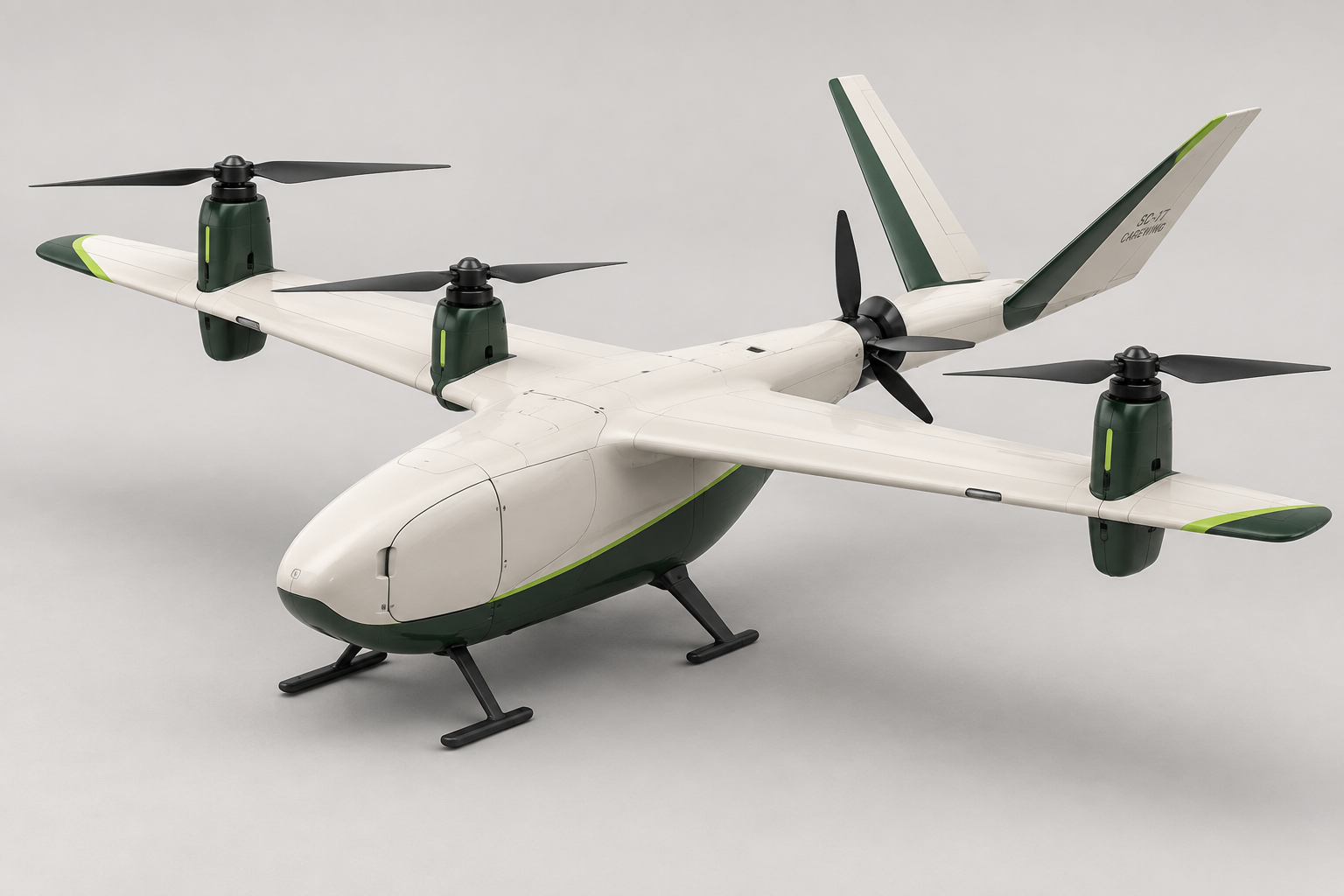
CONCEPT ONLY · PRE-FEASIBILITY · 21 SEPTEMBER 2026
Electric quadplane reference aircraft for a 17-minute Amsterdam medical-sample corridor.
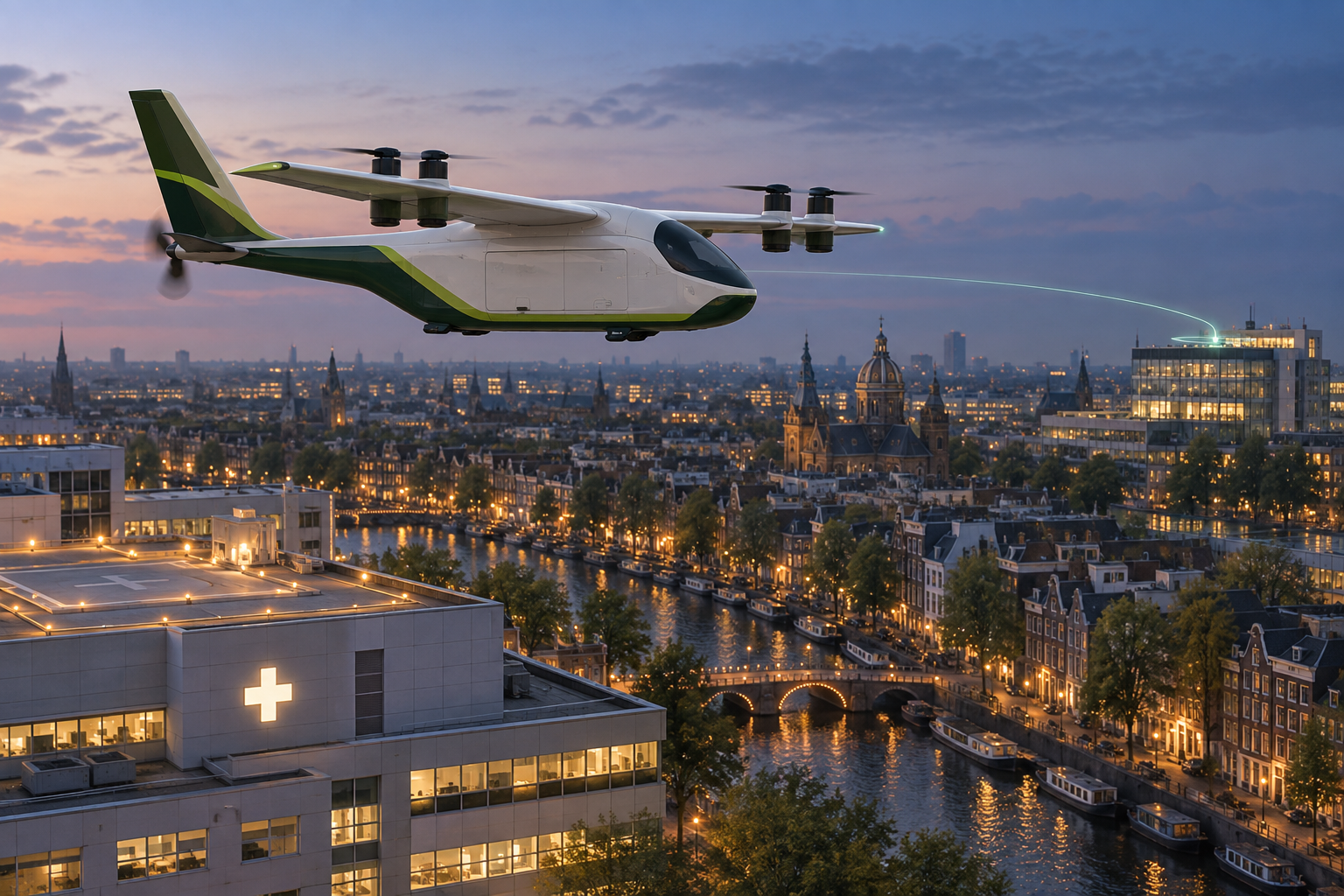
Dedicated lift rotors serve compact approved pads. The wing and pusher turn the cross-city leg into efficient, quieter cruise.
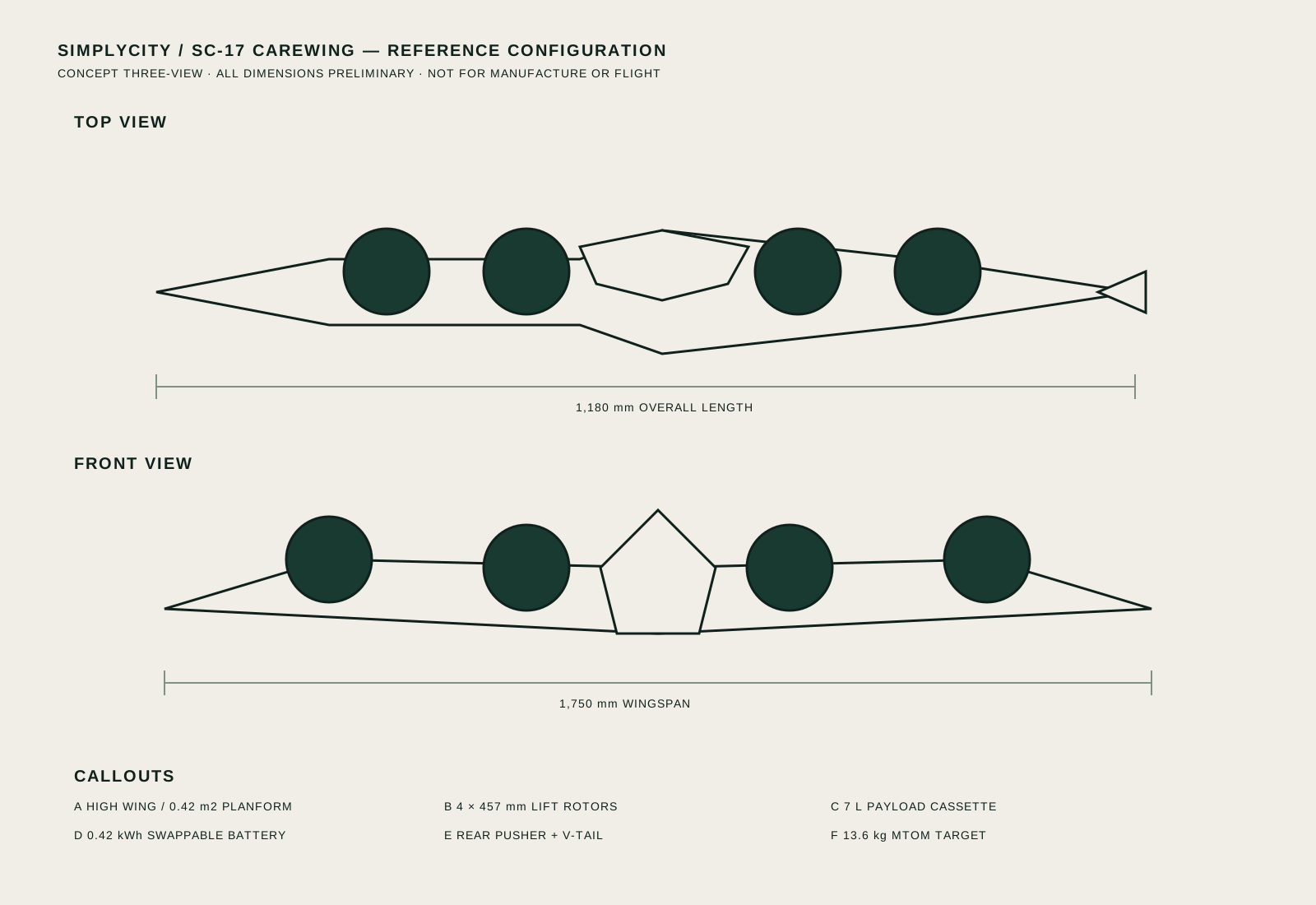
| MTOM | 13.6 kg |
| Payload | 2.5 kg / 7 L |
| Span | 1.75 m |
| Nominal range | 35 km |
1.5 min release + 0.67 min depart + 11.36 min cruise + 0.67 min arrival + 2.8 min handover = 17.0 min target for an 18 km route.
Simplycity releases only in-envelope missions. The aircraft climbs, transitions to wing flight, follows an approved route volume, lands and closes a chain-of-custody record.
Wing loading: 133.4 N / 0.42 m² = 318 N/m². Stall: √[2W/(ρSCLmax)] = 16.97 m/s = 61.1 km/h. Cruise: CL 0.744; CD 0.072; D 12.9 N; electrical power ≈ 486 W.
Hover: four 457 mm rotors give 0.656 m² disk area; ideal induced power 1.21 kW; planning draw 2.5 kW after losses/margin.
Energy: cruise 0.089 kWh + vertical 0.056 kWh + auxiliary 0.025 kWh = 0.170 kWh nominal. 30% reserve produces 0.221 kWh planning requirement; 0.42 kWh pack × 80% = 0.336 kWh usable.
Validate mass, aerodynamics, propulsion, wind, battery ageing, noise, failures and operational risk before any flight activity.
Health-gated launch; geofence; independent position/communications strategy; energy monitoring; approved return/divert behaviours; controlled pad; cargo retention and thermal monitoring.
Route survey → digital model → ground article → tethered/free flight → supervised corridor → limited service. Measure noise, energy, reliability and operating risk at every gate.
SC-17 makes the first care corridor tangible. It is the vehicle envelope that lets partners build a safety case, hubs and operating data that turn coordination software into trusted city infrastructure.
Select the operating partner and supplier, survey an 18 km route, define the cold-chain requirement, then replace every planning number with measured evidence.
Not a manufacturing drawing, flight manual or approval to operate.